
13th Floor, Bay View Tower,
Plot No.7,Sector 11,
CBD Belapur-400614,
Navi Mumbai,Maharashtra(India)
+91 22 45251000
info@triguninfotech.com

Choosing appropriate technology for expanding fleets may seem to be a big decision. However, fleet managers require software that provides functionality for everyday tasks, complies with business needs and is available at all times.
In big 2026, cloud-based ship management software is a real solution for a wide range of fleet management activities through remote access and real-time synchronization of ships and shore teams. The on-premise software is still relevant for situations when strict control over data and restricted connectivity are required.
Cloud-Based Ships Management Overview
A cloud-based solution is provided via remote servers that may be accessed using either a web browser or onboard applications. This eliminates the need for fleet owners to invest in expensive hardware infrastructure.
A maritime SaaS ERP system follows a subscription model, hence, there is no need for a large initial investment in hardware systems. Through these software systems, more users and vessels may be added as the fleet grows in the future.
Main Advantages
Conditions For Using On-Premise Systems
Cloud-based ship management software is accessed remotely, while on-premise software is installed on local servers located in the company office or directly on board the vessel. Such a strategy allows companies to have more control over the database and have all their information inside their own infrastructure.
Local implementation may be appropriate in cases where there are special needs regarding the sovereignty of data or in highly isolated locations.
Comparing Connectivity And Fleet Visibility
Connectivity is an important factor to be considered for current-day shipping. Remote fleet monitoring software makes sure that inting to the network.
Cloud platforms can collect data even when there is no connection using offline functionality, after which data synchronization can occur once connectivity is resumed. An on-premise solution will run locally without any network connection.
Considering Deployment And Long-Term Scaling
Deployment impacts how fast the fleet can begin operating the management software. Efficient ship management system deployment will easily reduce delays in implementation and give teams access to necessary functionalities.
Important comparison
formation will be accessible to shore teams and facilitates data synchronization upon connec
Attribute
Cloud Computing
Traditional
Pricing
Subscription model
High initial cost
Setup
Quicker deployment
Longer deployment process
Scalability
Easy scalability
Through hardware upgrades
Upgrades
Automatic upgrade process
Controlled by business internally
Data control
Cloud-based computing
Internal computer system
Scaling will be much easier with the cloud solution should there be any increment in the number of ships, users, or requirements. A scalable maritime ERP may reduce the need for physical expansion for ship vessel management teams.
Bottom Line
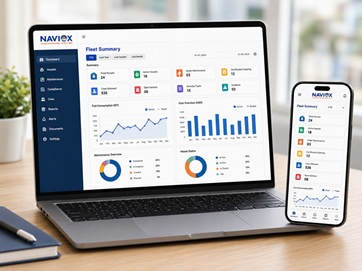
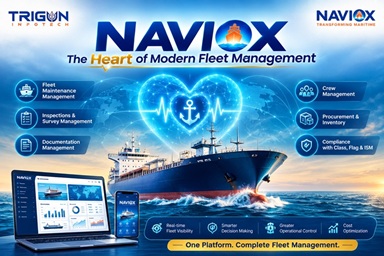
A good ship management system must be able to support current operations and still be feasible in the face of changing fleet needs. There are many great benefits that come with using Cloud-based ship management software in 2026. For example, Naviox can offer you all the tools necessary for teams in the fleet vehicle and maritime industries..
Naviox can be the platform you need to help you achieve all these goals for your shipping company.
+91 22 45251000
info@triguninfotech.com
Development
Apps Development E-Commerce Blockchain Data Science Automation and AI Software Consulting
 sitemap.xml





.png)



.png)
