13th Floor, Bay View Tower,
Plot No.7,Sector 11,
CBD Belapur-400614,
Navi Mumbai,Maharashtra(India)
+91 22 45251000
info@triguninfotech.com

Key Components of a Comprehensive Marine Fleet Management System
Fleet oversight in modern maritime operations involves more than time spent at sea. To meet the goals, a unified framework technology is important. It helps link route planning with crew members, regulatory adherence, task coordination, and real time tracking, all within one connected environment.
Marine fleet management systems today are advanced digital solutions enabling ship owners and navigators to maintain safer voyages, lower expenses, and operate smoothly.
These systems blend data streams, automate responses, adapt to conditions, and support decision making across diverse vessel types, from cargo carriers to unmanned units.
Efficiency emerges not from isolated upgrades but through consistent integration of functions once handled separately.
Data Centralization
If you use vessel monitoring solutions, you get a single hub that collects what used to be scattered information and turns isolated tasks into smooth processes. Instead of separate actions done manually, operations using marine fleet management systems follow structured digital paths.
Real time tracking feeds into forecasting tools, which influence how repairs are timed. Crew scheduling aligns with these updates, while rules and standards are checked continuously.
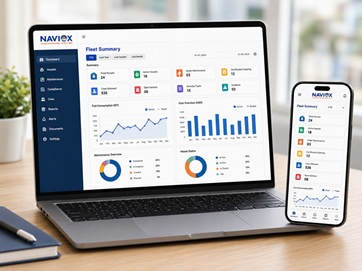
Information appears clearly on screens, whether large or handheld, allowing access without complexity. Each piece connects behind the scenes, forming one steady flow with the marine fleet management system.
Navigation and Real time Awareness
Positioning at every moment shapes how fleets understand location. Using satellite networks known as GNSS, alongside detection tools like AIS and various sensors, ships report movement, direction, and speed without delay.
Such continuous updates support decisions around safety, path efficiency, and readiness during crises. In the Marine Fleet Management System, a central digital dashboard shows the place of each unit on the water.
Adjustments to the course happen fluidly, influenced by shifting sea patterns and atmospheric data.
Predictive and Planned Maintenance
Ahead of schedule reviews, maintenance planning modules support consistent vessel performance. Through operational hour tracking combined with diagnostic inputs, task timing becomes systematic.
Instead of waiting for failure, data from past activity merged with live readings signal early warnings. Equipment stress points show earlier now, so interventions happen sooner.
Unplanned halts drop when alerts guide timely responses. System longevity follows naturally from steady oversight using fleet maintenance management.
Crew and Personnel Management
Operating vessels requires oversight of staff credentials, shifts, and legal employment conditions at sea. These maritime asset tracking systems handle recruitment tasks while organizing time onboard through rotation planning.
Compliance records and required courses are monitored within the same environment. Linking team details directly to ship activities supports safer practices across the network. Administrative effort can be reduced when information flows between departments without delay.
Compliance and Safety Management
Adherence to global shipping regulations, such as SOLAS and MARPOL, matters more. Tools within Marine Fleet Management System handle reporting tasks automatically while also monitoring inspection schedules.
When it comes to meeting legal obligations, tracking procedures becomes simpler through integrated marine compliance management systems. Records of audits, accidents, or training exercises are stored using QHSE components.
Analytics and Decision Support
Fleet operations generate vast amounts of information, which analytics shape into useful insights for ship operational efficiency. Visibility improves when key metrics like fuel use, trip outcomes, upkeep spending, and environmental output are displayed clearly.
Instead of reacting, teams may anticipate requirements through models that project trends ahead of time. Insight follows not just from collecting numbers but from interpreting them wisely.
+91 22 45251000
info@triguninfotech.com
Development
Apps Development E-Commerce Blockchain Data Science Automation and AI Software Consulting

 sitemap.xml





.png)



.png)
